
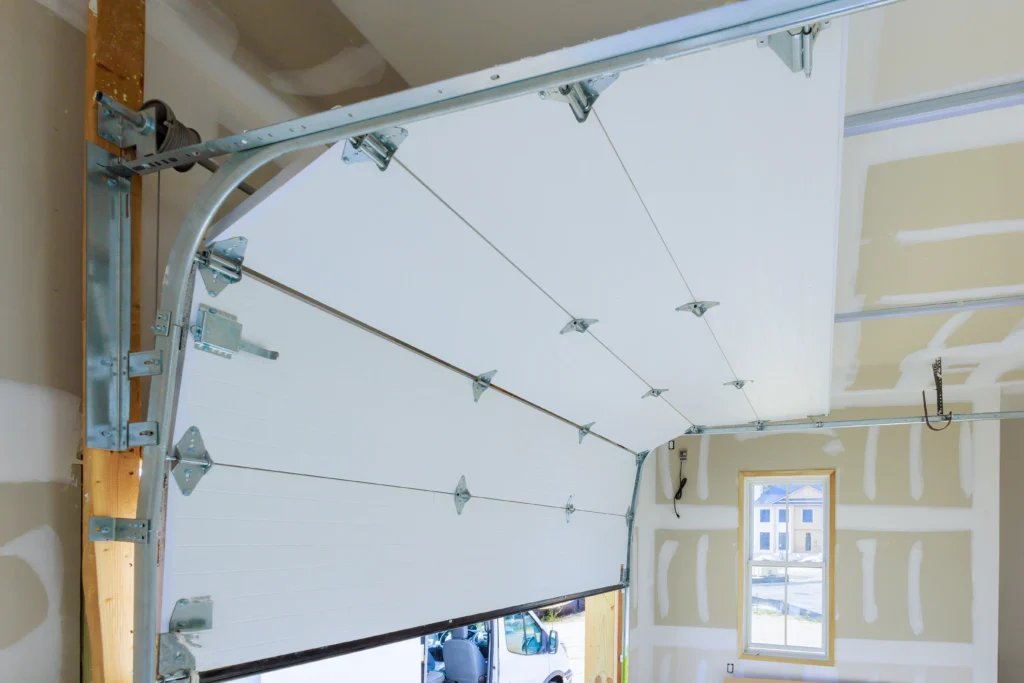
A bent garage door track can seem like a minor rail issue, especially if the door still opens and closes most of the time. The problem is that a track controls the roller path. When the path changes, the entire door system starts compensating in ways it was not designed to handle. In Chicago, IL, this can escalate faster because freeze-thaw swings, salty moisture, and tight garages often add extra strain to parts that are already working harder than they should.
This guide explains, in a listicle style, how garage door track damage can spread into bigger problems, what warning patterns to watch for, and when it is smarter to stop testing the door and schedule professional service.
Quick Answer
A bent track can create friction and uneven travel, which increases wear on rollers, hinges, brackets, cables, drums, and the opener. If the door starts tilting, jerking, reversing, or sounding strained, track damage may already be affecting other parts and should be inspected before it turns into a wider system failure.
If you want the main causes and safest next steps, read Bent Garage Door Track: What Causes It and What to Do.
The Bigger Problems Bent Tracks Can Trigger
A track bend is rarely isolated for long. Here are the most common “domino effects” technicians see.

Roller Wear Speeds Up
Rollers are built to roll, not grind. A bent rail can pinch the roller path or push the roller sideways, causing:
- Faster wheel wear
- Roller wobble
- Noisier travel
- Increased friction that keeps worsening
Why it matters in real life: once rollers start wearing unevenly, the door can begin shaking more, which adds stress to brackets and hinges.
Hinges and Door Sections Take Extra Stress
A door moves in sections connected by hinges. If the track forces the door to travel unevenly, hinges can start carrying loads they were not meant to carry, leading to:
- Hinge looseness
- Misaligned door sections
- Increased rubbing along one side
- Louder travel and vibration
This is one reason a “small bend” can turn into “the whole door feels off.”
Track Brackets and Fasteners Can Shift Further
When a door jerks through a tight spot, it creates vibration and impact forces at bracket points. Over time, that can cause:
- Bracket drift
- Fasteners loosening
- Track leaning away from the wall
- Repeat binding at the same catch point
In older Chicago garages, where framing may already move a bit seasonally, this can compound quickly.
The Door Can Start Traveling Unevenly
One of the most serious effects of track trouble is uneven travel. This often shows up as a tilt or a door that looks “twisted” during movement. Uneven travel can lead to:
- Rollers riding the edge of the track
- Increased side pressure on one rail
- Higher risk of sudden shifting
- Harder closing that triggers a reversal
If you want the warning signs that matter most, read Bent Garage Door Track Warning Signs You Shouldn’t Ignore.
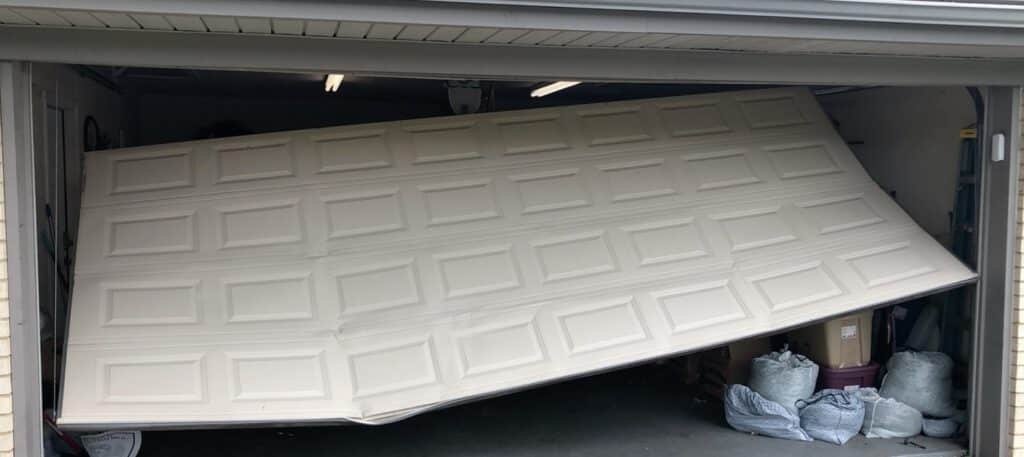
Cables and Drums Can Experience Uneven Load
Tracks guide the door, but cables lift it. When travel is uneven, cable tension can become uneven too. That can cause:
- Uneven winding on drums
- Cable wear from rubbing or mis-tracking
- Inconsistent lift from side to side
- A door that begins crooked
Important safety note: cables and drums are high-tension areas. If you suspect uneven lift, it is best handled by a trained technician.
The Opener Can Strain and Wear Faster
An opener is designed to move a balanced door along a smooth path. When a track bend adds resistance, the garage door opener may:
- Work harder and run hotter
- Trigger more reversals
- Develop inconsistent travel limits
- Show a weaker response over time
If the opener force settings are too aggressive, it may keep pushing through resistance, which can worsen track deformation and wear other parts.
Safety Features Can Behave Inconsistently
When a door binds, it may not travel consistently. That can create:
- Random reversal events
- Closing that stops short
- Increased sensitivity to minor resistance
- Confusing symptoms that look like an opener issue
This is one reason track trouble is often misdiagnosed as a remote, sensor, or motor problem.
If you want a safe step order for quick checks without getting into risky areas, read Bent Track Checklist: Safe Checks Before You Call a Professional.
Patterns That Suggest Track Trouble Is Spreading
Here are common “pattern clues” that the issue is no longer just a bent rail.
- The door is getting louder week by week
- The catch point is becoming more aggressive
- The opener reverses more frequently
- The door tilts more noticeably than it did at first
- The door needs multiple tries to close
- The door shakes more during travel
- The door scrapes on one side consistently
These patterns matter because they usually signal increased friction, shifting hardware, or uneven lift.
Factors That Can Make Escalation Faster
Track issues can worsen anywhere, but Chicago’s conditions make certain triggers more common.
- Salt and moisture near the slab can accelerate corrosion at the bottom track zone, weakening rails and fastener areas.
- Freeze-thaw cycles can worsen bracket shifting and alignment drift when hardware is already slightly loose.
- Tight alley garages increase impact risk, especially near the lower track where dents happen most.
- Wind-driven debris can get into track channels and increase friction, especially during seasonal storms.
What to Do When You Suspect Wider Damage
This is the “smart next step” section. It is not a repair lesson. It is meant to keep you safe and help you decide what to do next.
Limit Door Cycles
If the door is binding, testing it repeatedly can accelerate wear and increase strain on the opener.
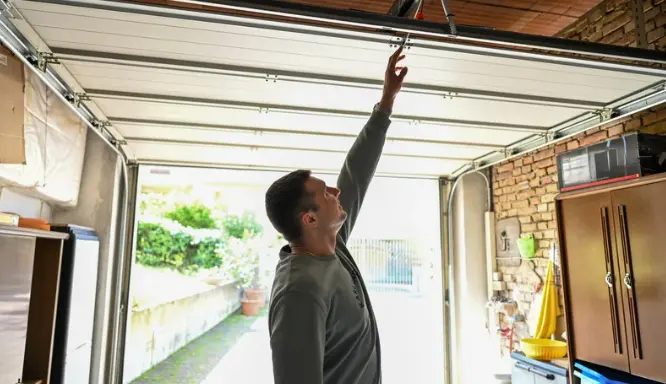
Watch for Tilt and Edge Riding
If the door tilts or rollers appear close to slipping, stop using the door until it is inspected.
Note What Changed Recently
Small details help diagnosis:
- A recent bump
- A new scraping sound
- A new catch point
- Worsening after deep cold or rapid warmups
- Reversal behavior during closing
Avoid High-Tension Areas
Do not touch garage door cables, drums, springs, or bottom brackets. Those areas are not safe for casual inspection.
If you’re deciding who should handle track and travel issues, this Angi guide explains what type of professional typically addresses garage door problems.
What a Technician Focuses On When Track Trouble Has Escalated
When track damage starts spreading into wider problems, a technician usually checks:
- Track alignment, spacing, and bracket stability
- Roller condition and hinge play
- Door balance and lift behavior
- Cable and drum tracking
- Opener response, travel limits, and force settings
- Safety sensor alignment and consistent closing behavior
The goal is to restore smooth travel and remove the root cause so new wear does not continue.
This Bob Vila garage door maintenance guide reinforces how one misalignment can cascade into faster wear across rollers, hinges, and opener performance.
Get Reliable Garage Door Track Help in Chicago, IL
A bent track can look like a single-part issue, but once wear spreads to rollers, hinges, brackets, cables, or the opener, it becomes a system concern. In those cases, the best outcome comes from confirming track alignment, door balance, and travel behavior together.
Premium Garage Door Repair can pinpoint what is causing the track to fight the roller path and explain what needs attention now versus what can wait. You will also get a safety-focused check of opener response and door travel so the system runs smoothly without guesswork. Contact us and give us a call to schedule service.